Breathe
Take a slow, comfortable breath. Let the exhale be gentle and unforced.
- Breathe in: “God is near.”
- Breathe out: “I am not alone.”
 XTERMIGATOR KidsHellenic Education
Faith • Awareness • Belonging
Gentle ways for children and families to notice what the body may be communicating, reconnect with the present moment, and choose a faithful next step.
Understanding the signal
ELAHRING’s Daytime Stress information can help a wearer notice changes in the body’s estimated level of activation throughout the day. A higher reading does not necessarily mean that something is wrong or that the person feels emotionally distressed. It may reflect focused work, excitement, movement, mental demands, or a challenging moment.
What is my body communicating, and what might help me in this moment?
That question can create a gentle invitation to check in. The reading is an estimate for daily awareness; it does not diagnose stress or any health condition.
A gentle faith-filled reset
If you feel tense, overwhelmed, distracted, or simply need a pause, choose one practice. You do not have to do them all.
Take a slow, comfortable breath. Let the exhale be gentle and unforced.
Gently touch your thumb to each fingertip, one at a time. With each touch, use a grounding word:
Without judging the experience, notice:
Open a short Scripture, say a familiar prayer, name one thing for which you are grateful, or connect with someone in your faith community.
The goal is not to make every uncomfortable feeling disappear. It is to make space for awareness, prayer, and a thoughtful next step.A prayer to share
The Jesus Prayer, shared as a gentle moment for children and families.
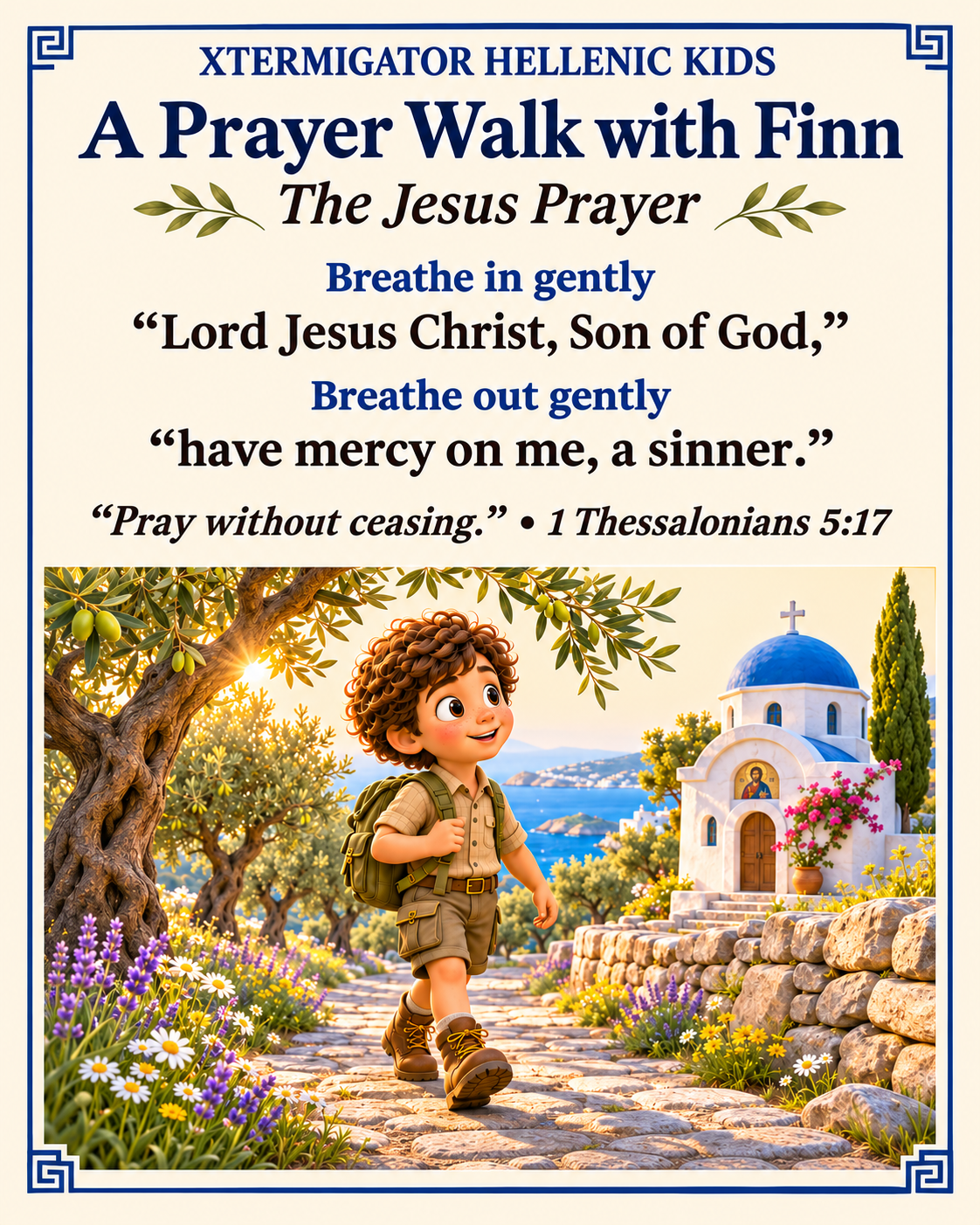
Breathe in gently
"Lord Jesus Christ, Son of God,"
Breathe out gently
"have mercy on me, a sinner."
Κύριε Ἰησοῦ Χριστέ, Υἱέ τοῦ Θεοῦ, ἐλέησόν με τὸν ἁμαρτωλόν.
"Pray without ceasing."
1 Thessalonians 5:17
Children may pray, listen, look at the picture, or take a quiet pause. Following a breathing pattern is optional. Stop if it feels uncomfortable.
A simple framework
Notice the signal, sensation, or feeling without deciding that it is “good” or “bad.”
Choose a comfortable breath, a grounding practice, a prayer, or a short Scripture.
Return to the day with faith, connection, and intention—or ask a trusted person for support.
Invisible disabilities and belonging
Anxiety, sensory overload, attention differences, fatigue, chronic illness, trauma, and other disabilities may be invisible to the people nearby. A child may need movement, quiet, extra processing time, a break, or help from a trusted adult.
These practices are invitations, never requirements. A child does not need to disclose a diagnosis or explain a private need in order to use a support.
Faith & Calm Corner
Choose a gentle breathing guide or listen to Greek Orthodox hymns and Byzantine chant. Nothing plays automatically, and every activity is optional.
Breathing is always a choice. Stop if it feels uncomfortable and choose another calming support.
Listen quietly, pray, draw, or simply rest. Use the player controls to choose a hymn, pause, or adjust the volume.
Featured public-domain collection: Byzantine Music of the Greek Orthodox Church. Playback begins only when you choose it.
Keep sound at a comfortable level and use headphones with adult guidance. This voluntary calm space supports participation and does not replace medical care.
Technology in service of the person
Wearable information and grounding practices can support reflection, but they do not replace medical or mental-health care, Bible study, church participation, ministry, conversation about faith, or meaningful human relationships.